Now Enrolling for 2018-2019 school year, Classes begin Sept. 7, 2017.

Now Enrolling for 2018-2019 school year, Classes begin Sept. 7, 2017.
Accepting registrations for grades Pre-K-6th. Email jfisher.ccnewtownsq@gmail.com
Showing posts with label classical learning method. Show all posts

Friday, March 24, 2017

Fine Arts, Orchestra


Weeks 19-24 bring a study of the orchestra, its composers and instruments. We will introduce concepts weekly on community days, and you can expand upon the studies at home.

The focus of your teaching at home is to help your children develop a love and appreciation for this music.

Ways to do this are many, but a few suggestions include:
  • listen to music while doing chores, in the car, or while drawing/painting, 
  • Make a game out of paying attention to and recognizing the instruments played during a song,
  • attend a symphony together (for younger students, look for a children's program which has adjusted length and will typically showcase different instruments in a way for clear understanding),
  • ask a friend who plays an instrument for a short lesson and demonstration,
  • find books, cds, and videos at your local library about different instruments, composers, and musical time periods,
  • use music as an aid for quiet reflective time while everyone draws, journals, or prays,
  • seek out ways to let your children get their hands on instruments--a museum, a touch-and-feel symphony, friends or family
  • talk about how music can facilitate worship, and enjoy worshipping in song together as a family
  • consider private music lessons for your child. Most music teachers will encourage even the youngest of students to begin, but you're never too old to start! If cost is a barrier, start with the parent learning from a book or video and then teaching the children as they progress. (Remember, we don't have to be experts, just lead learners!)
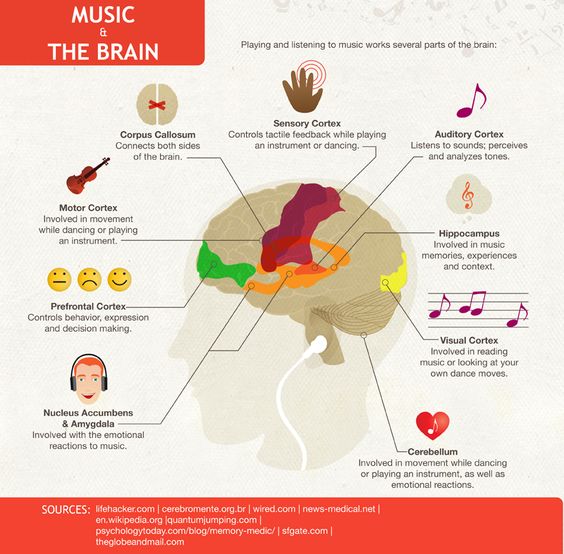
We know that God is a musical God, and in Heaven there will be much music! We know that God made us musical beings--we are soothed, invigorated, alleviated, and ignited through music, yet it is something that is being taught less and less. We gain the full benefit of music when we study it. In addition, science has shown that there is no better activity to aid in our learning of every other subject than learning a musical instrument. Ages ago, the study of music was not seen as elective but as core. Let's reclaim this lost perspective!
picture source: Classical FM Radio

Presentation Schedule, 4th Quarter

We strive to develop oral communication skills at a young age in an ever-increasing digital world. We know that equipping our children to be confident communicators will prepare them for adulthood and most importantly, bring glory to God as they are able to make Him known in the world.

The final quarter of presentations will incorporate all 3 of our previous quarterly focuses:

  • Connecting with the audience
  • Articulation
  • Style and expression

Week 19 (March 23): "Tell us about your name." Does it have a meaning? Why did your parents choose that name for you? What is its origin? Do you have any nicknames, and who calls you by them?

Week 20 (March 30): "How To." Tell us how to do something assuming that the audience doesn't know the most basic steps. Organize into 4 main steps. It can be any topic. Examples: "How to plant a seed", "How to build a lego tower", "How to check out a library book", "How to set the table." If applicable, feel free to bring items that help demonstrate while still using strong verbs to explain, i.e., "Stack the blocks one on top of the other" vs. "Do this, then that"

Week 21 (April 6): "Show and Tell a Piece of Art" (either famous work or homemade). Tell what period it is from (or resembles). Who is the artist? What techniques and materials were used? What is the subject? What was the artist's motivation? 

Week 22 (April 13): "Instrument of the Orchestra" Choose an instrument from the orchestra that you'd like to learn more about or that you'd like to play. What is its name? What group does it belong to? (brass, strings, woodwinds, or percussion). What sound does it make? How do you play it? Feel free to bring visual and audio aids--draw a picture, find a picture in a book, find a song featuring the instrument and play a piece of it, or even bring the instrument itself if you have access to that.

Week 23 (April 20): "Favorite part of CC" Tell us what you like about CC. It can be several things from any of the elements: Christian, Classical, Community. Is there a favorite Fine Arts or Science focus? Favorite piece of memory work?

Week 24 (April 27): "Summer Plans" Tell us some things that you're looking forward to about the summer. Going on a trip? Playing outside? Swim lessons? Family reunion? Give us a glimpse of your summer months.

Wednesday, March 8, 2017

Spring Open Houses, March 9 & April 6

Join us for a morning of Foundations! 

 Open Houses on Thursday, March 9, or Thursday, April 6 

9AM-noon at Liberty Church in Newtown Square 

What you can expect:

  • Assembly with prayer, praise, scripture memory, and study song of the Timeline of the World
  • 30 minutes intro of New Grammar with songs, dance, chants in the 6 core subjects: Geography, Science, English, Math, Latin, and History
  • 30 minutes Fine Arts project (March 9 = painting and study of Morisot, April 6 = music and orchestra)
  • 30 minutes Students give oral presentations for their peers
  • 30 minutes Science experiment using the Scientific Method
  • 30 minutes review game
Join us for a picnic lunch and recess on the ground afterwards!

FYI, we have a short snack break. Bring a snack and water for your children.

In keeping with the classical method, parents remain in the classroom with their children so as to enjoy the learning process together. Younger siblings are always welcome. 

Monday, February 20, 2017

Gainsborough Diorama Presentations

Our Great Artist lesson on Week 15 was Gainsborough landscapes, and since we learned that Gainsborough utilized dioramas as preparatory projects to painting landscapes with realistic depth, our students each made and presented their own dioramas. How we loved seeing each child's creativity!

Presentation time

After each student presented and explained their diorama, we moved to the art room where the kids used their diorama as a model for their landscape water color, painting it in layers from back to front.
Week 15 study of Great Artists = Gainsborough

Saturday, January 21, 2017

Presentation Schedule, 3rd Quarter

Our focus for this quarter's presentations is style. These prompts are chosen to develop each presenter's unique and expressive style.

Week 13 – Something I did over the break (can be related to the holidays, a family trip, a favorite new gift, a book enjoyed with the family, etc.)

Week 14 – Memorize a poem, nursery rhyme, or hymn lyric. Recite for the class. Intro with name and author of poem. Conclude by saying, “I chose this poem because______. Thank you for listening.” (No questions fielded for this presentation).

Week 15 – Present your Gainsborough diorama project (discussed in art the previous week). Explain the elements of your diorama and how you assembled it.

Week 16 – Choose a favorite picture book and retell the story in your own words and style. (Sequence chart suggested).

Week 17 – “What’s in my pocket?” Choose a small object and conceal it in your pocket. Reveal 3 clues one at a time, allowing the class to guess between each clue. The first clue should be subtle, while the last clue should allow most to guess the object.


Week 18 – Choose a favorite expressive passage from a book (can be dialogue or prose). Read it expressively to the class. (Passage doesn’t have to be memorized but can be).

Sunday, January 15, 2017

Informational Meeting Sat. Jan. 21

CC Newtown Square will host an informational meeting for interested families on
Saturday, January 21, 
11AM-noon 
at the Panera in West Chester Town Center.
We will have a brief overview, explanation, and time for questions.
All are welcome!

No commitments are expected or required--please come to explore classical home education with built-in community, accountability, and a flexible plan!

Tuesday, November 29, 2016

Phases of the Moon


I love the 6 week emphasis on outer space because there are so many fun ways to expand on our studies at home! Here are few additional resources for phases of the moon.


Moon Calendars for 2017 (for purchase)

Don't forget that 2017 is a year of a total solar eclipse! Read more at space.com

And lastly, my kids' favorite: Phases of the Moon snack time! ;) 


Friday, October 21, 2016

Presentation Schedule, 2nd Quarter

The presentation emphasis for our 2nd quarter is articulation--not so much in diction of speech, but in sequence of thought. Therefore, our presentation topics will require an order of thinking and relaying of information. 

  • Week 7, October 20 = An activity I enjoy--What is it? How do I do it?
  • October 27 = Fall Break
  • Week 8, November 3 = Tell us about an animal. What type of consumer is it (herbivore/carnivore/omnivore)? Where does it live, what does it look like? Anything else interesting that you'd like to share?
  • Week 9, November 10 = Choose a place on the map that we have studied. What is it like there? What language is spoken? What is a common food? Anything else interesting you'd like to share?
  • Week 10, November 17 = What is your favorite Bible story? Who are the main characters? What happens in the story? What do we learn about God's qualities from this story?
  • Week 11, December 1 = What are ways that my family worships/celebrates Jesus? (Can be Christmas-y or any time of year). What do we do? Why do we do it? What is a verse in the Bible that supports this?
  • Week 12, December 8 = Impromtu presentations. A surprise activity for students that will exercise thankful and respectful responses.
Because these presentations are more involved and we have 30 minutes for 10 students, we will keep each one to a length of 2 minutes, and allow for 2 questions for each student. 

Tuesday, October 18, 2016

How last week's science experiment helped us worship Jesus

Integrated learning is a buzz word in classical education. We integrate our subjects because we have an integrated God, i.e. God's love for people isn't a separate subject from His brilliance in creating the world. If science means the "study of the natural world" it stands to reason that we also learn about the Creator of the world when we study science.

Last week on community day, we did a science experiment that demonstrated the magnetic forces of the solar system. We used a polarized magnet, iron shavings, paper, and vinegar. Through our procedure, we produced a visual image of the planets' orbits around the sun and understood that the magnetic pull of the sun contributed to their paths and orbit shape.

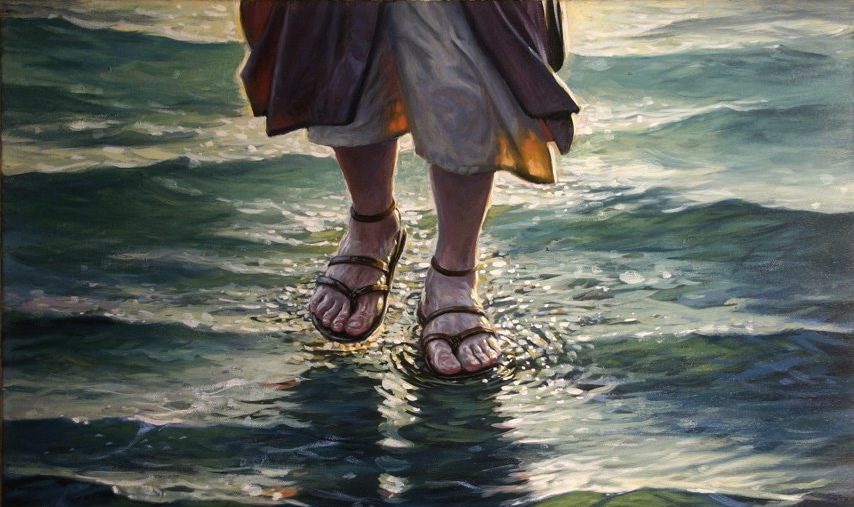
The next day during our breakfast Bible readings, the kids and I explored John 6:16-21, the story of Jesus walking on water. We've heard this story before, seen it depicted in cartoons, coloring pages, and pop culture references. The emphasis has usually been on the setting--detailed descriptions of the water, the boat, and the astonishment on the disciples faces. Nothing is wrong with this rendition of the story.

But the previous day's science lesson gave a whole new context to this miracle.

Let me be clear--it illuminated it for ME--the mama, the teacher, the middle aged adult. I found myself in awe of our Savior because the elementary school science experiment was fresh on my mind, and so because of this,

I was excited to review the science lesson while we discussed the scripture passage. 

The kids caught on immediately and I could see the awe and understanding in their eyes:

God has placed natural forces in motion to hold the planets together. He has created elaborate systems  and cycles (also a lesson from a previous week). Because of our science lessons, we have a greater understanding of how He does this, and so greater is our awe when God himself steps outside of those systems to do something unnatural!

The kids and I marveled together about how Jesus defied gravity by walking on water! Studying science made it more tangible for us. And the beauty of integrated learning is that we don't leave one lesson on the shelf while we study another. The benefit of homeschooling is that I'm with them for each of these subjects, so I can easily facilitate bringing it together.

Finding the relationship between science and scripture helps us worship the Lord more deeply, and that's really what this homeschool journey is all about!